
Advisory Committee
Fernando Ramirez Rozzi
.png)
An eco-anthropologist, research director at CNRS and member of the National Museum of Natural History, his work focuses on the biological diversity of modern human populations. He conducts in-depth research on Indigenous peoples, notably the Baka Pygmies of Cameroon and the Nilotic populations of Sudan.
Tupaarnaq kreutzmann kleist

An Inuit sheep farmer in southern Greenland, Tupaarnaq is heavily involved in the decolonization movements of her country, as well as in the recognition and promotion of Inuit culture.
Nigel Crawhall

Head of the UNESCO Section of Indigenous and Local Knowledge Systems, previously Director of the Secretariat of the Coordinating Committee of Indigenous Peoples of Africa, Nigel works on the preservation of indigenous languages and knowledge on various UNESCO sites
Juliette Pavy
.png)
Photojournalist, winner of the Photographer of the Year award at the Sony World Photography Awards. She is the first French woman to win this prestigious award, which recognizes her work on the long-term implications, and the emotional and physical consequences, of the forced contraception program implemented by Danish authorities on Inuit women in Greenland between 1966 and 1975.
Anne-Françoise Hivert
.png)
A correspondent for Le Monde, Anne-Françoise has notably worked in Greenland on the issue of the forced placement of Inuit children.
Pierre-Henry Deshayes

Pierre-Henry Deshayes is a journalist with Agence France-Presse (AFP), based in Oslo, Norway. An experienced correspondent, he covers a wide range of topics, from environmental issues to geopolitical issues, including science and social stories.
Llanka Millán
.jpg)
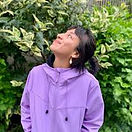
Llanka Millán is a young Mapuche activist and daughter of Moira Millán, an iconic figure in the indigenous women's movement for ‘Good Living’ in Argentina. She is actively involved alongside indigenous communities in defending their rights and territories and denouncing the violence suffered by these peoples.